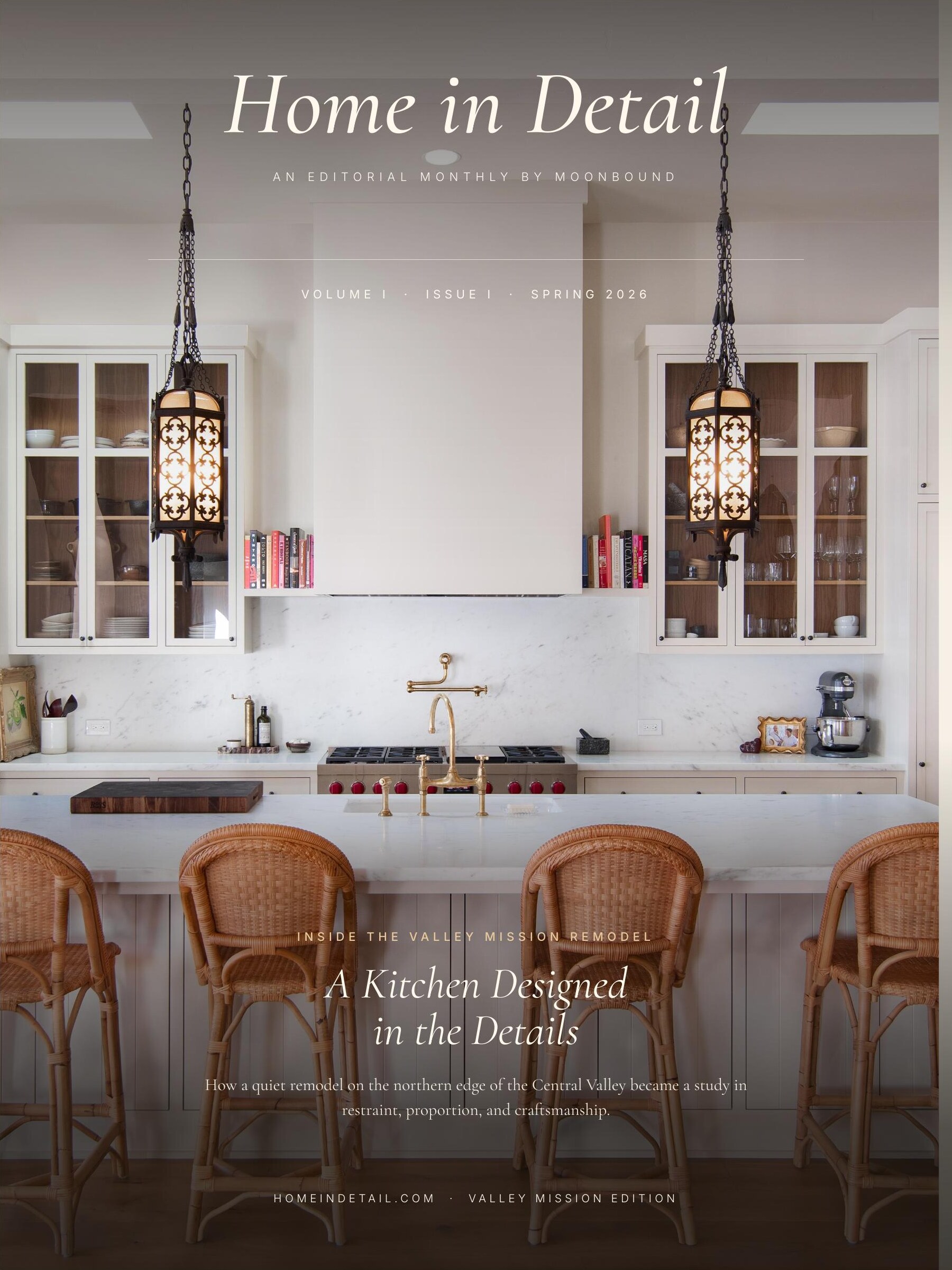
How a quiet remodel on the northern edge of the Central Valley became a study in restraint, proportion, and craftsmanship.
Words Jose Zamora & Ryan Kelly · Photography Moonbound
At first glance, the kitchen feels calm. It doesn’t announce itself or fight for attention. It sits softly inside the home — bright, open, balanced. But the closer you get, the more the room begins to reveal itself: the proportions, the materials, the cabinetry, the hidden storage, the arches, the stone, the way light moves across the space. None of it points to a project that was ever really about replacing a kitchen. It was about reshaping the way a home feels.
This is one project from Home in Detail — our editorial look at a single remodel at a time: the bones, the materials, and the hands that build it.
Part I
From a Kitchen Remodel to a Whole-Home Transformation
What began as a kitchen remodel became a transformation of the home’s main living areas. The original scope was a full kitchen: demolition, new cabinetry, countertops, appliances, electrical, and a reworked entry and hallway.
As the work developed, the opportunity grew. Flooring carried beyond the kitchen into the living room, office, hallway, and entry. A fireplace was added. The office gained a new French door. The entry was reframed into a more open, gracious arrival point, and skylights were brought into the kitchen to fill it with natural light. The result is a home that feels more connected, more intentional, and more architecturally complete.
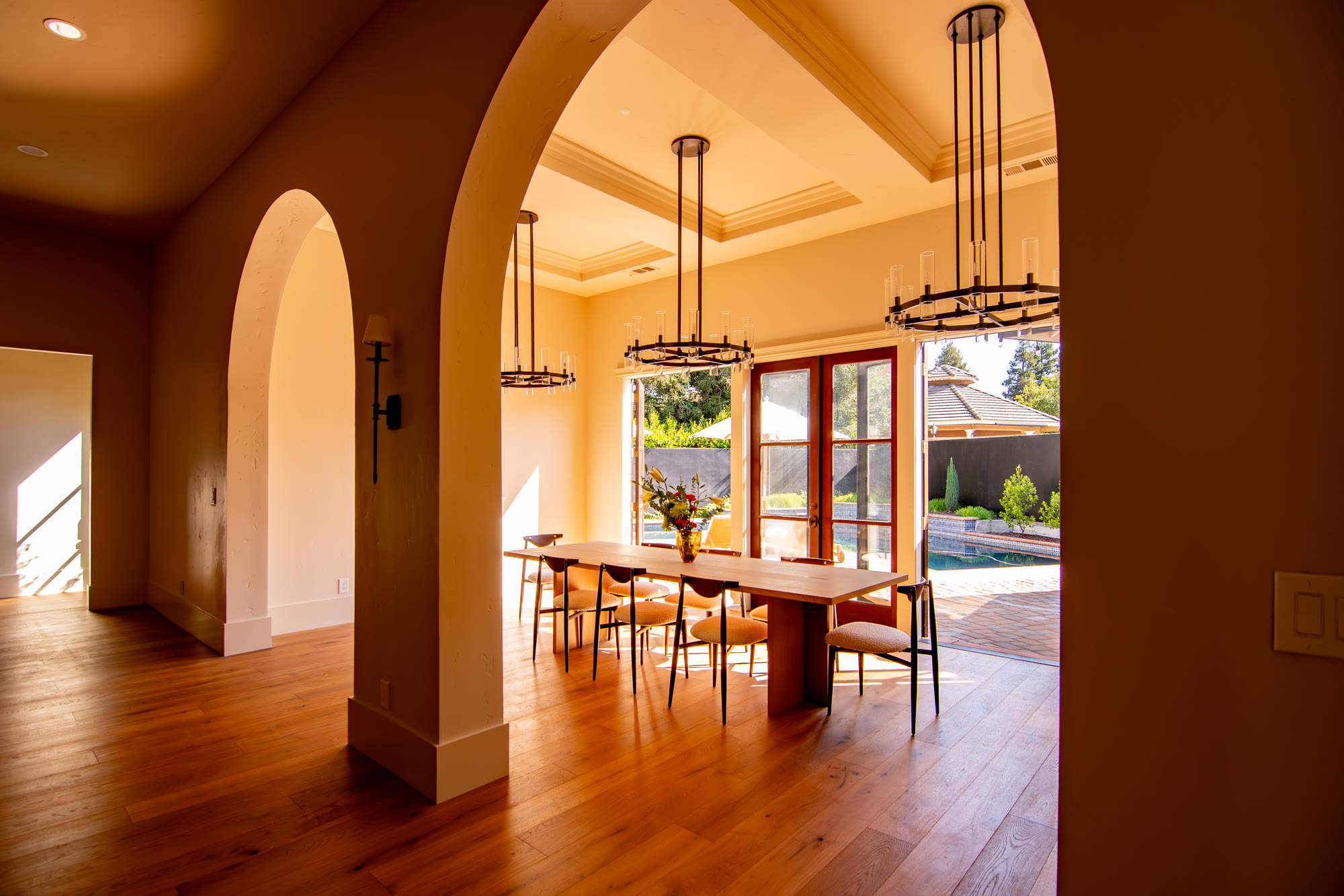
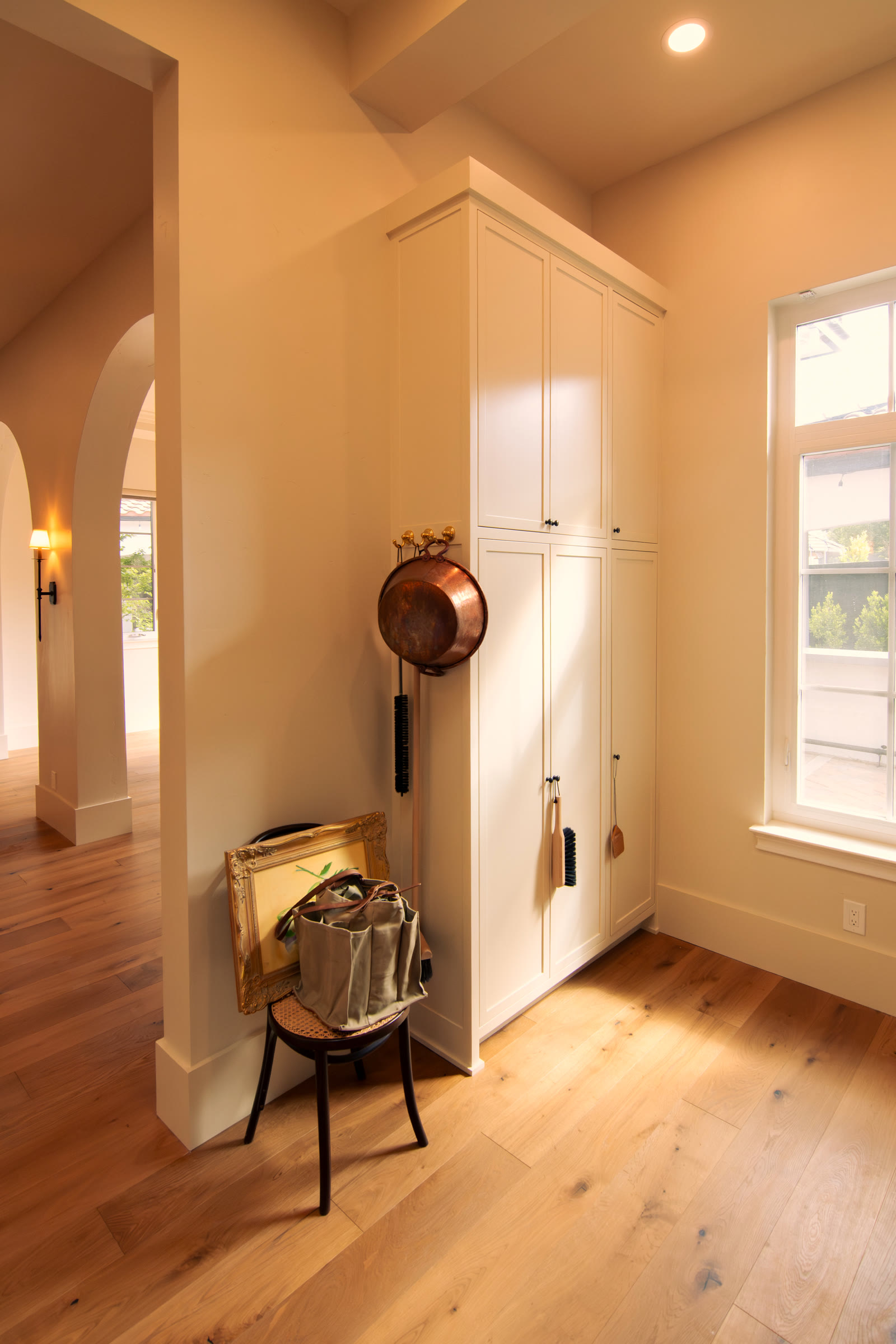
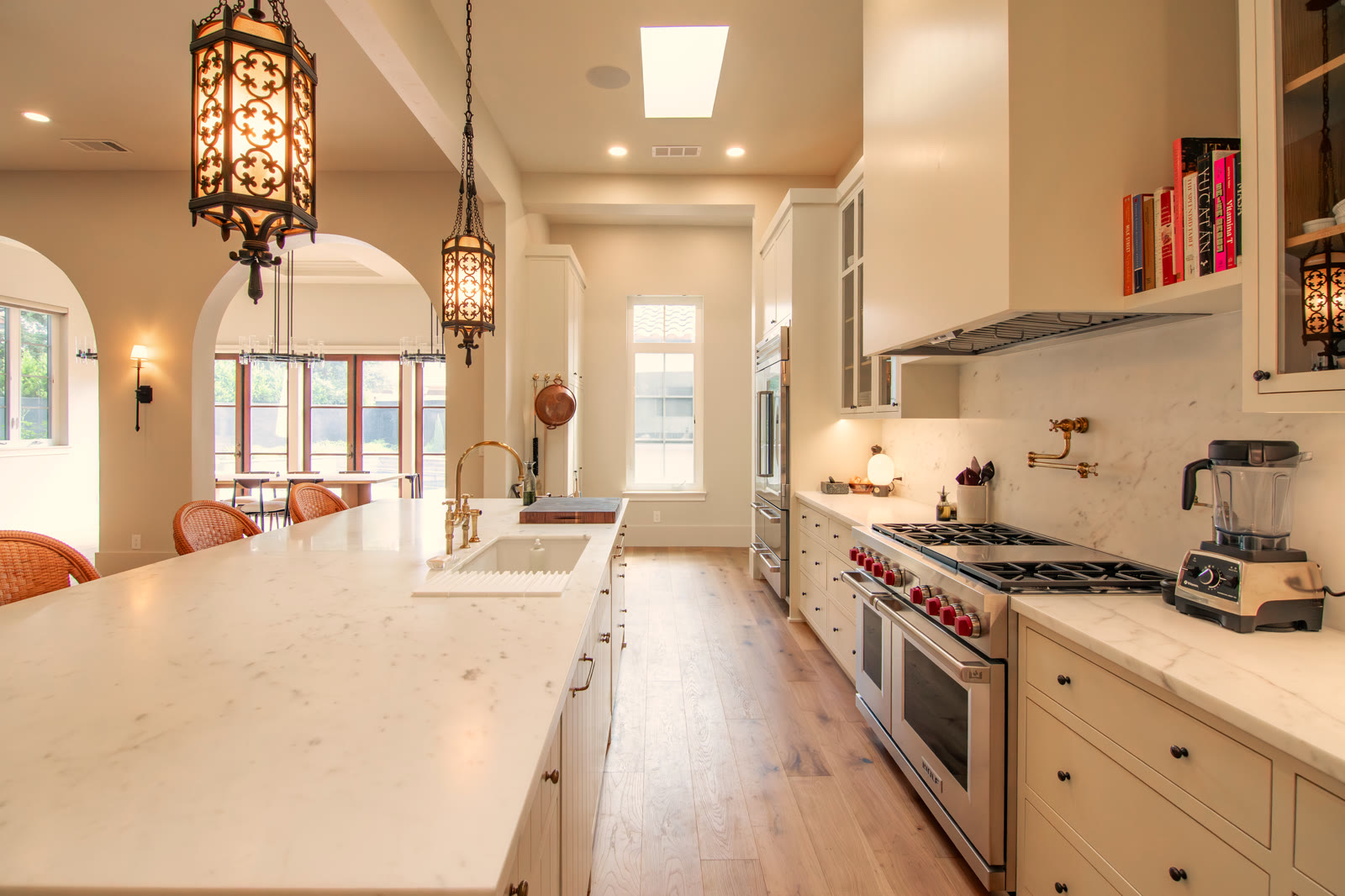
Arches and openness. New framing connects the cooking core to the dining room and beyond.
Part II
A Design Philosophy of Restraint
The design direction came from a specific balance: a rustic Mexican modernism, an Italian Tuscan influence, and a lighter modern sensibility — not out of place on the northern edge of California’s Central Valley.
The goal was never a farmhouse kitchen or an English-countryside look. It was a shared living space with an instant wow factor that still felt warm and refined — built on restraint and function rather than spectacle.
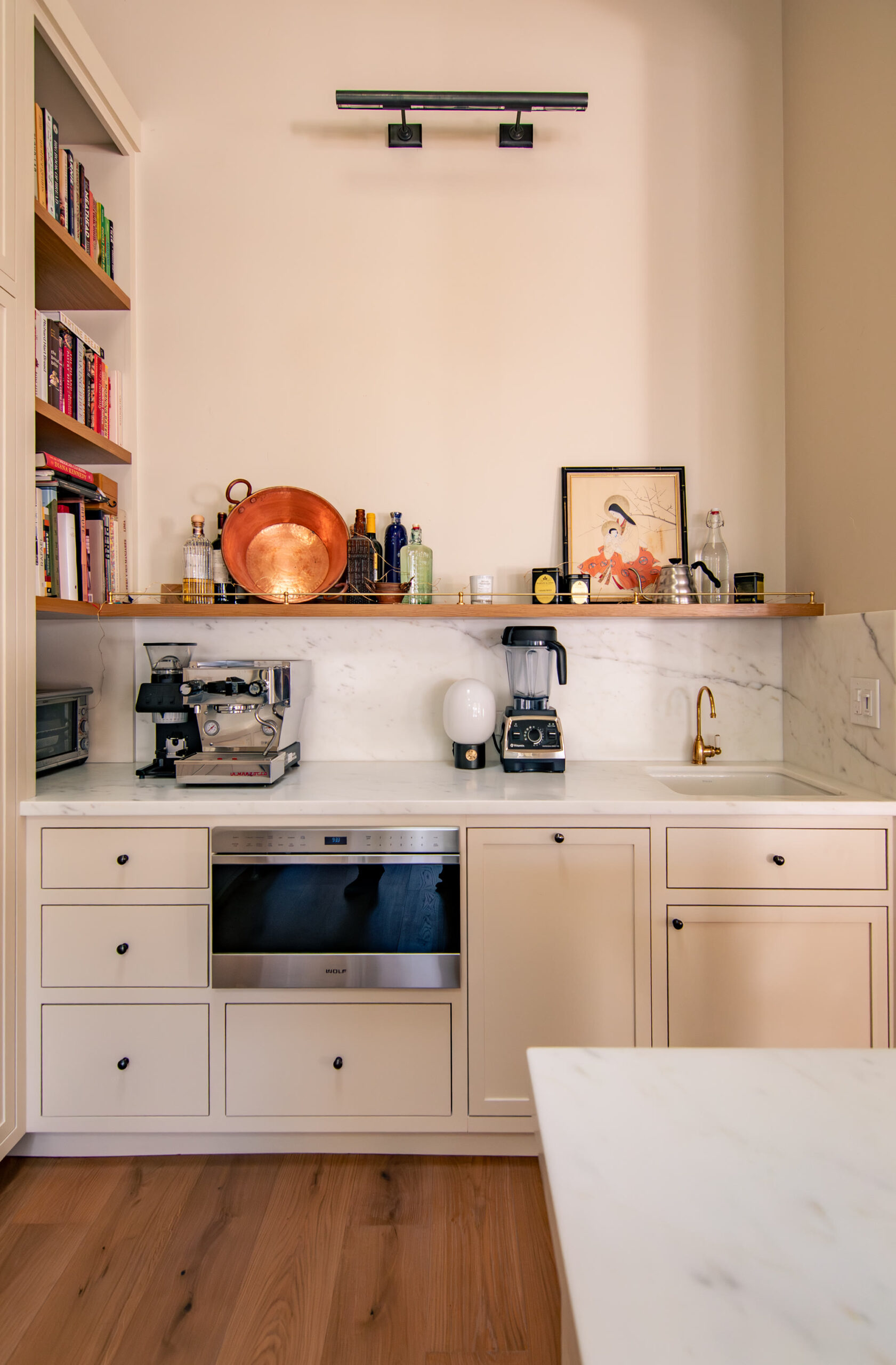
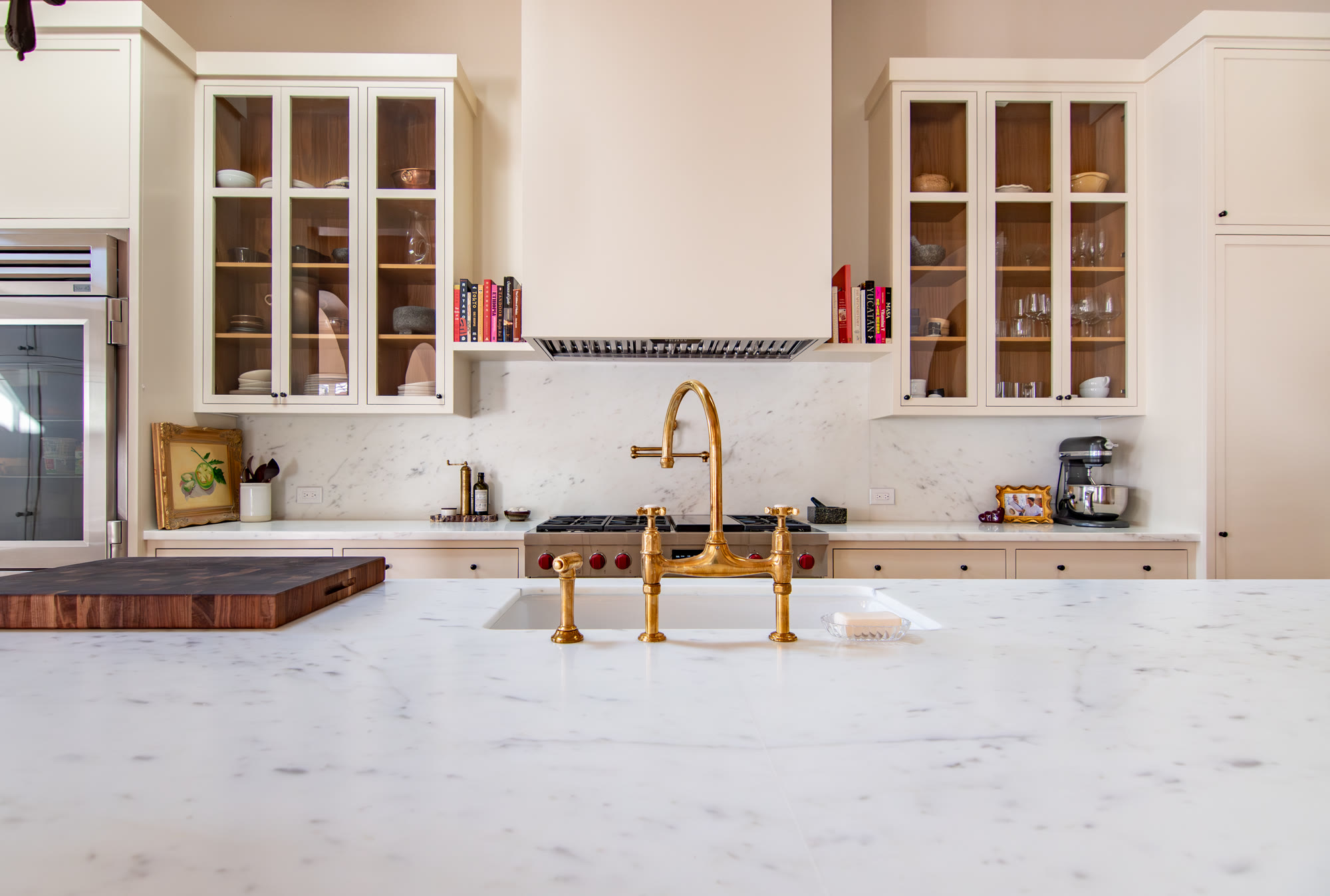
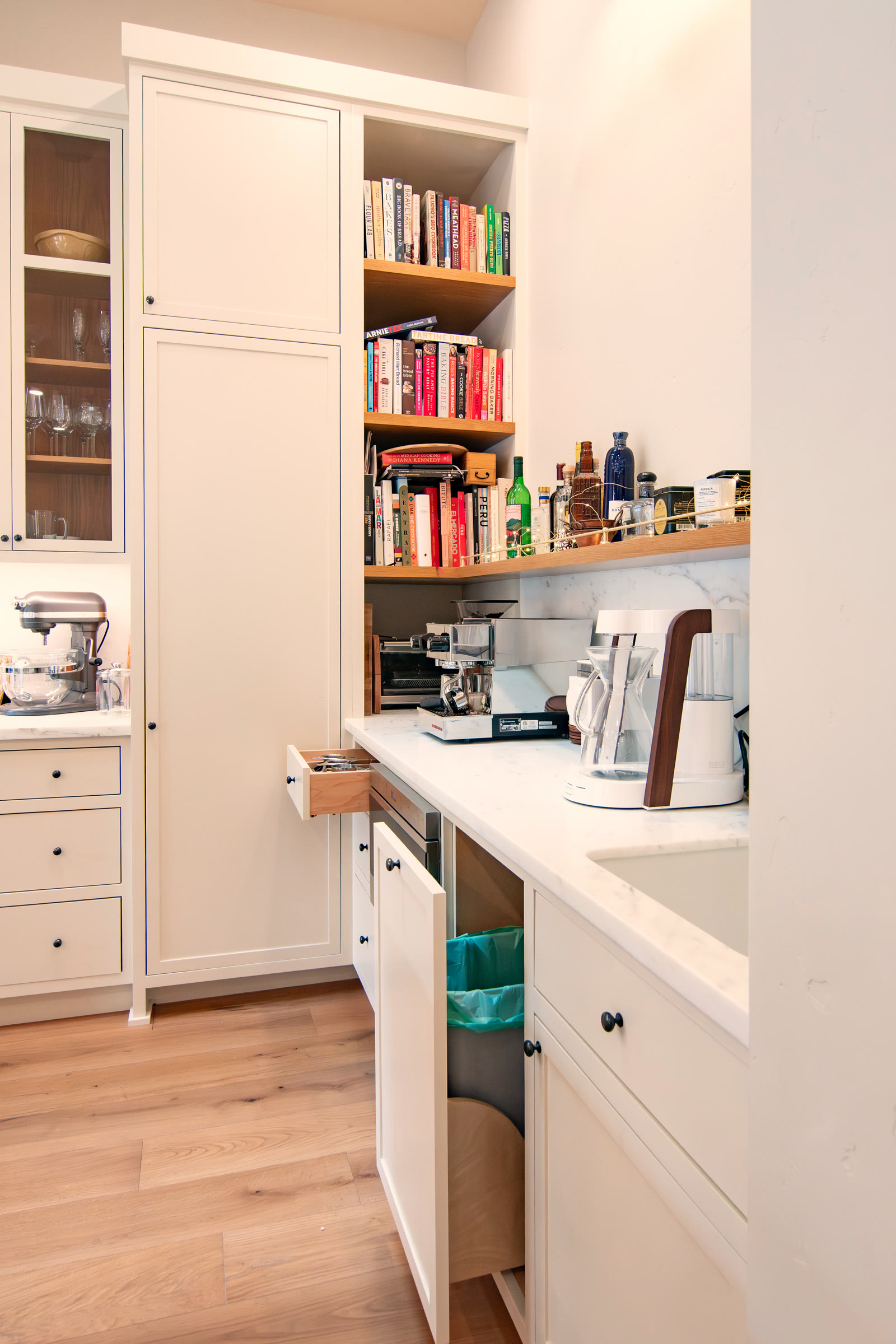
The bar. Brass, marble, and morning light off the coffee station.
“It feels like it was always there.”
— On the Cabinetry
Part III
Function, Considered Down to the Inch
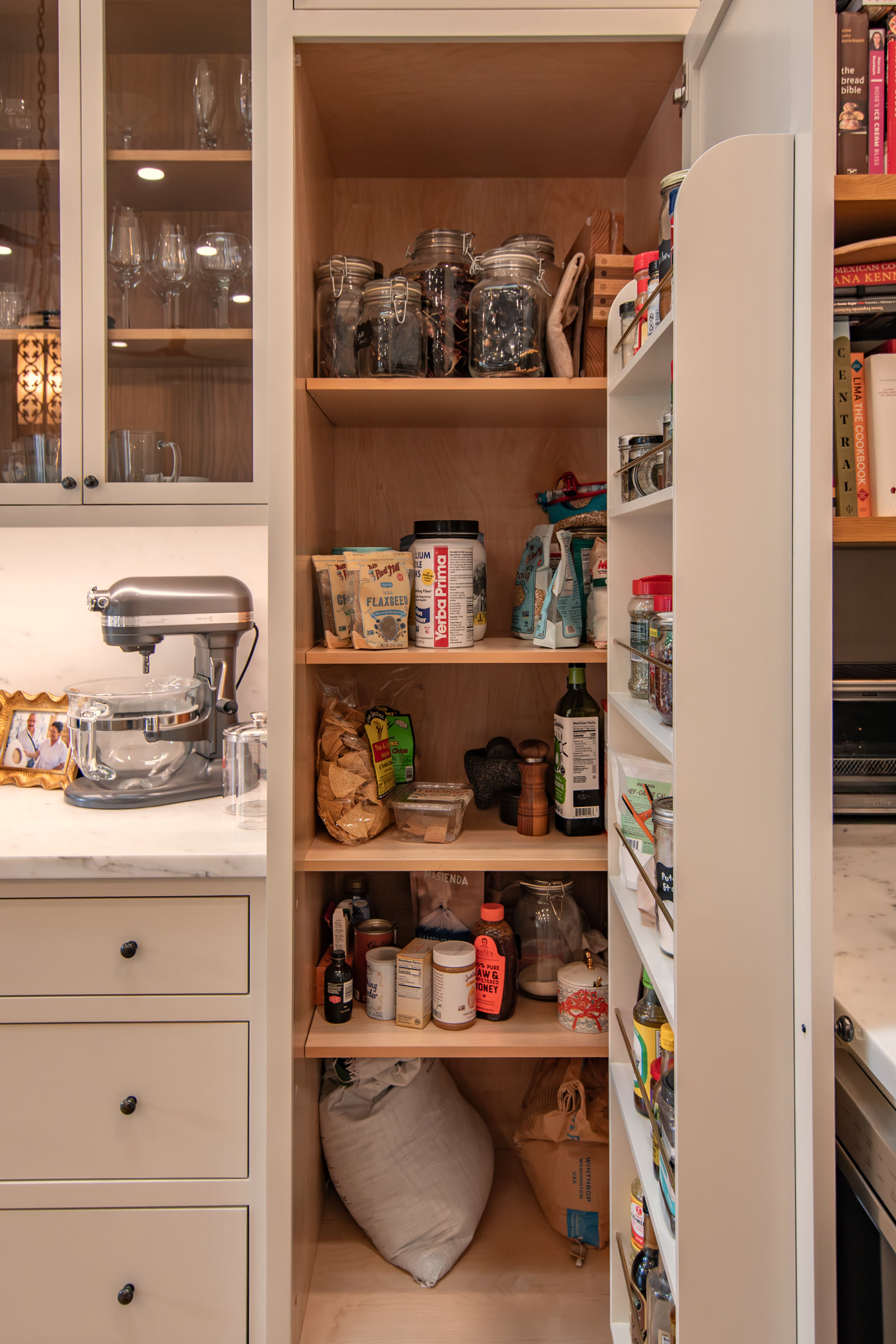
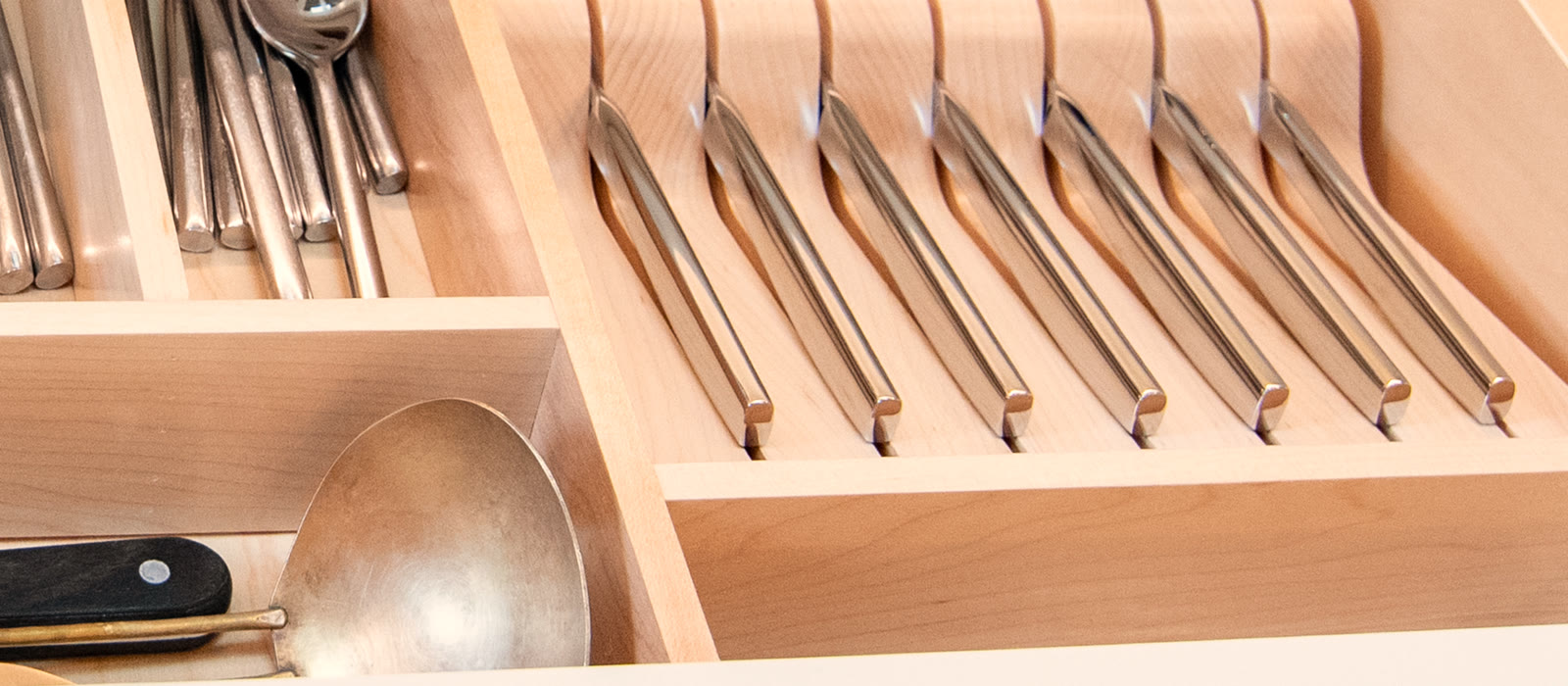
That same level of thought carried into how the space works. Storage was never an afterthought. The client’s spice bottles were measured. Her reach height was considered. Drawers were organized around the way she actually cooks, with custom maple compartments for knives, utensils, foil, parchment, and everyday tools. A hidden spice rack was built specifically for her, and a tea caddy was tucked away.
One cabinet was prepared for a future ice machine — plumbing already run and concealed until she decides to use it. Even the areas beneath the plumbing fixtures were fitted with spill-proof mats. It’s the kind of work you never see, which is exactly the point.
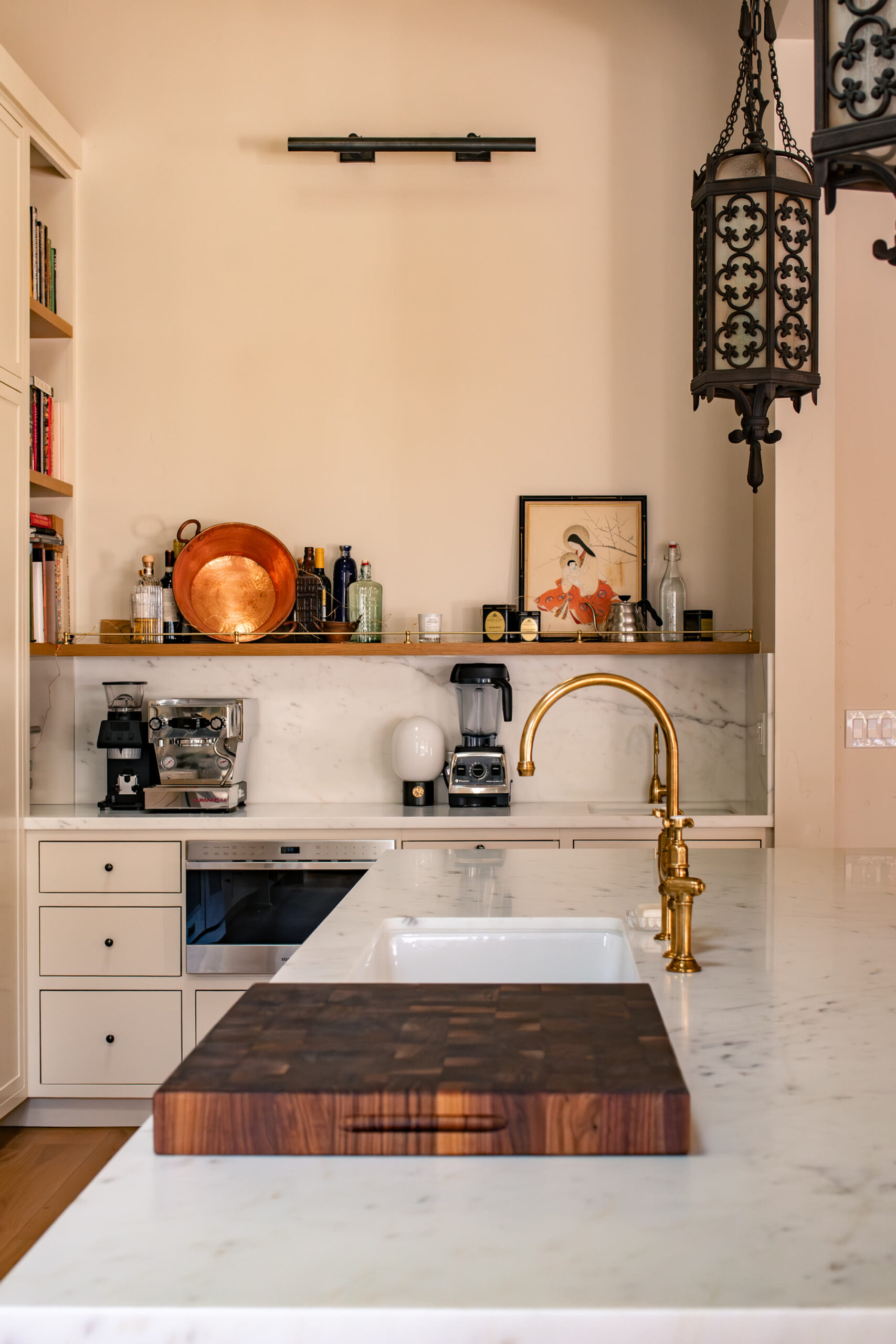
The working core. A butler’s pantry with its own sink, a step off the main kitchen.
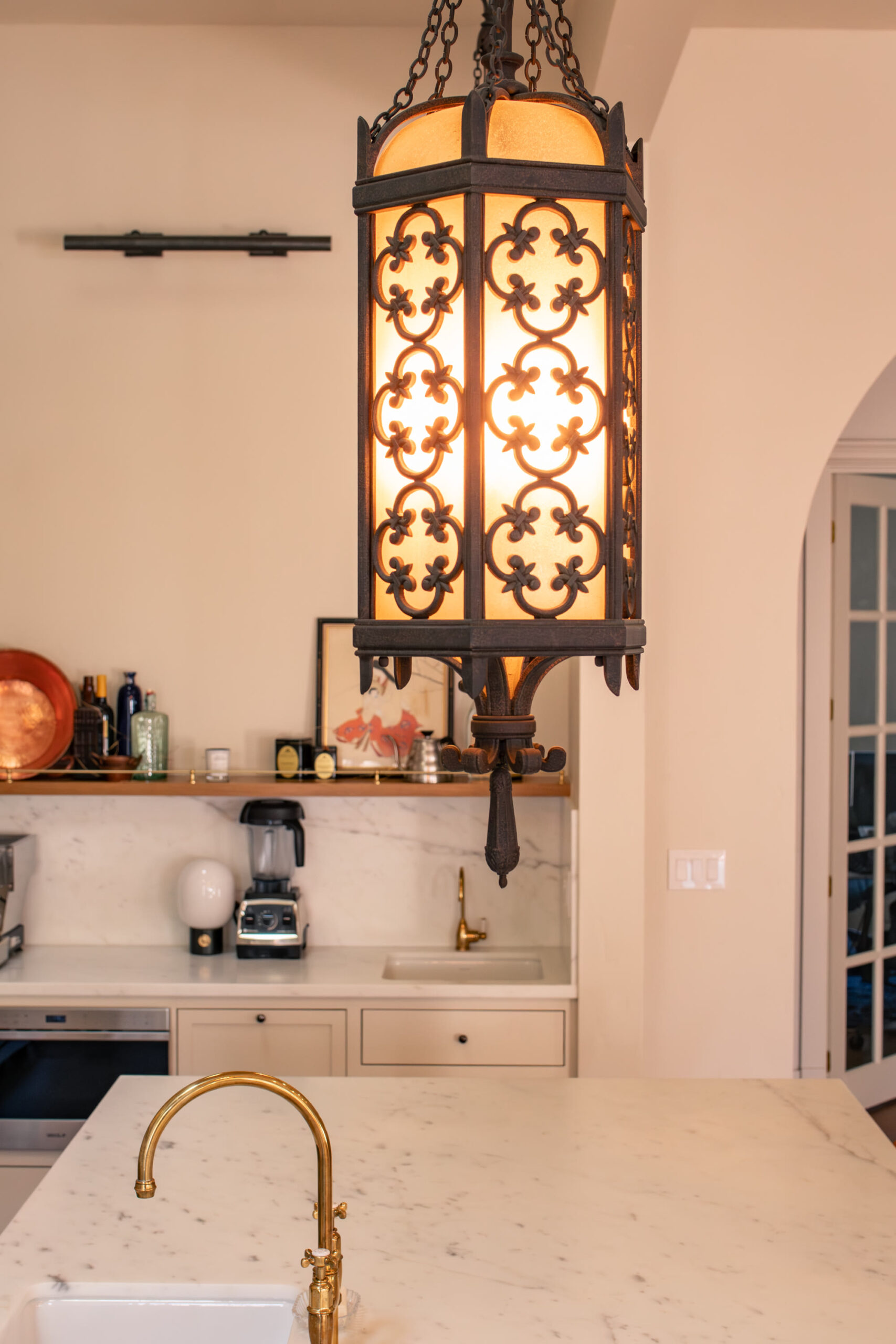
Iron over marble. A handmade pendant casting its pattern onto the stone.
Part IV
Precision and Craftsmanship
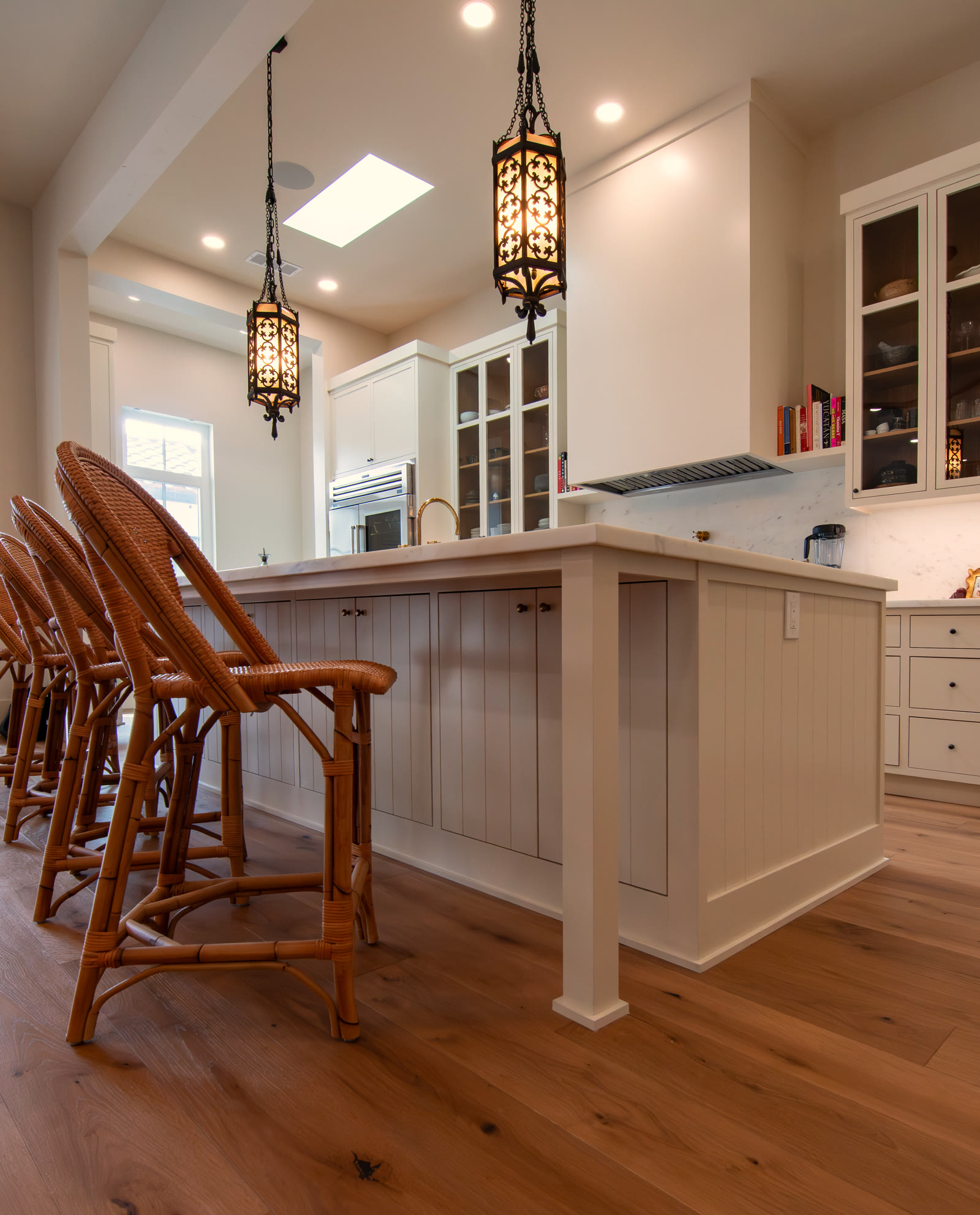
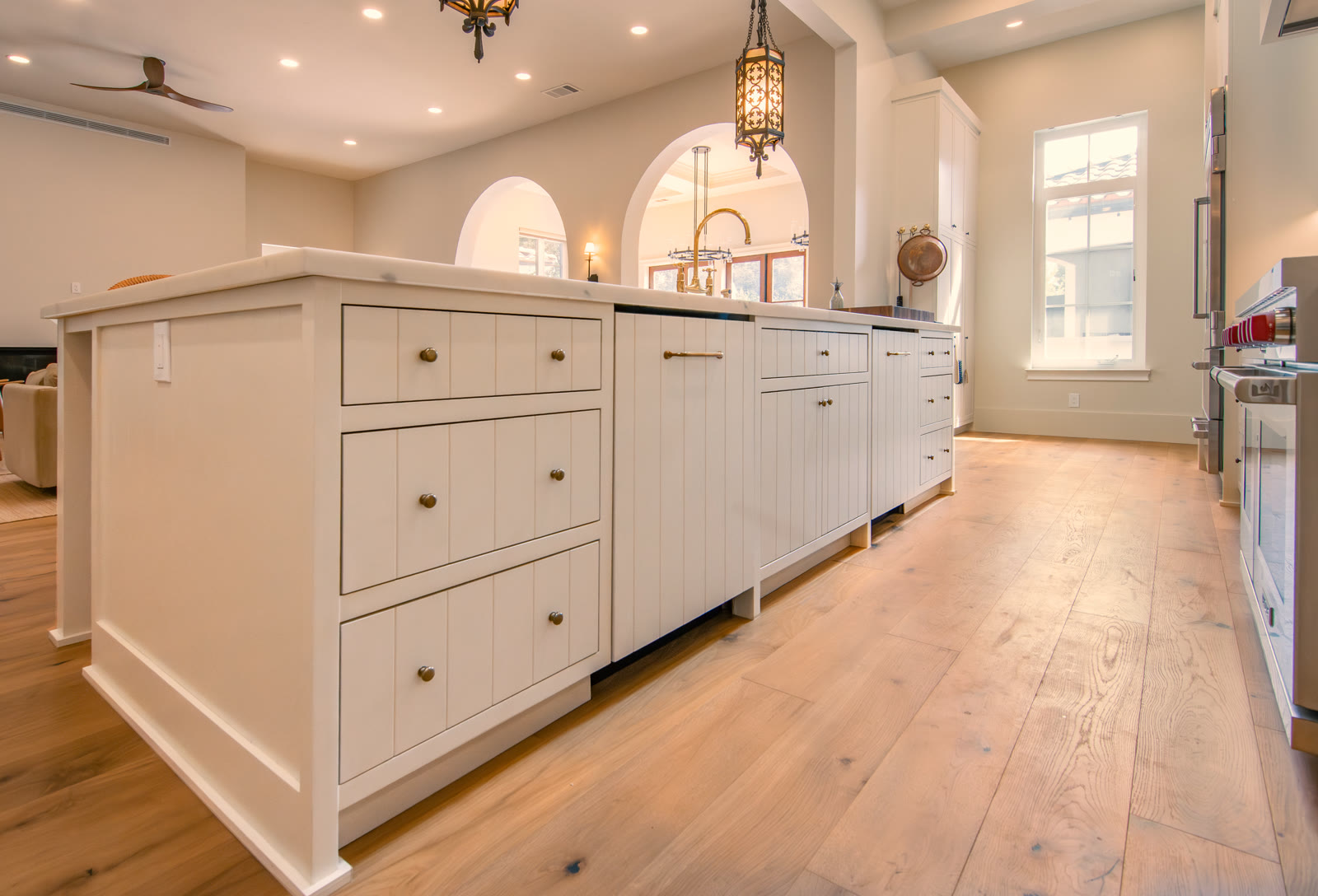
The island became one of the clearest examples of the project’s precision. What looks simple was carefully calculated. The panel spacing had to account for outlets, drawer pulls, dishwasher handles, and the way the doors align when closed — worked out so the hardware and electrical details land cleanly within the rhythm of the paneling. It’s invisible work, and it’s the reason the island feels so balanced.
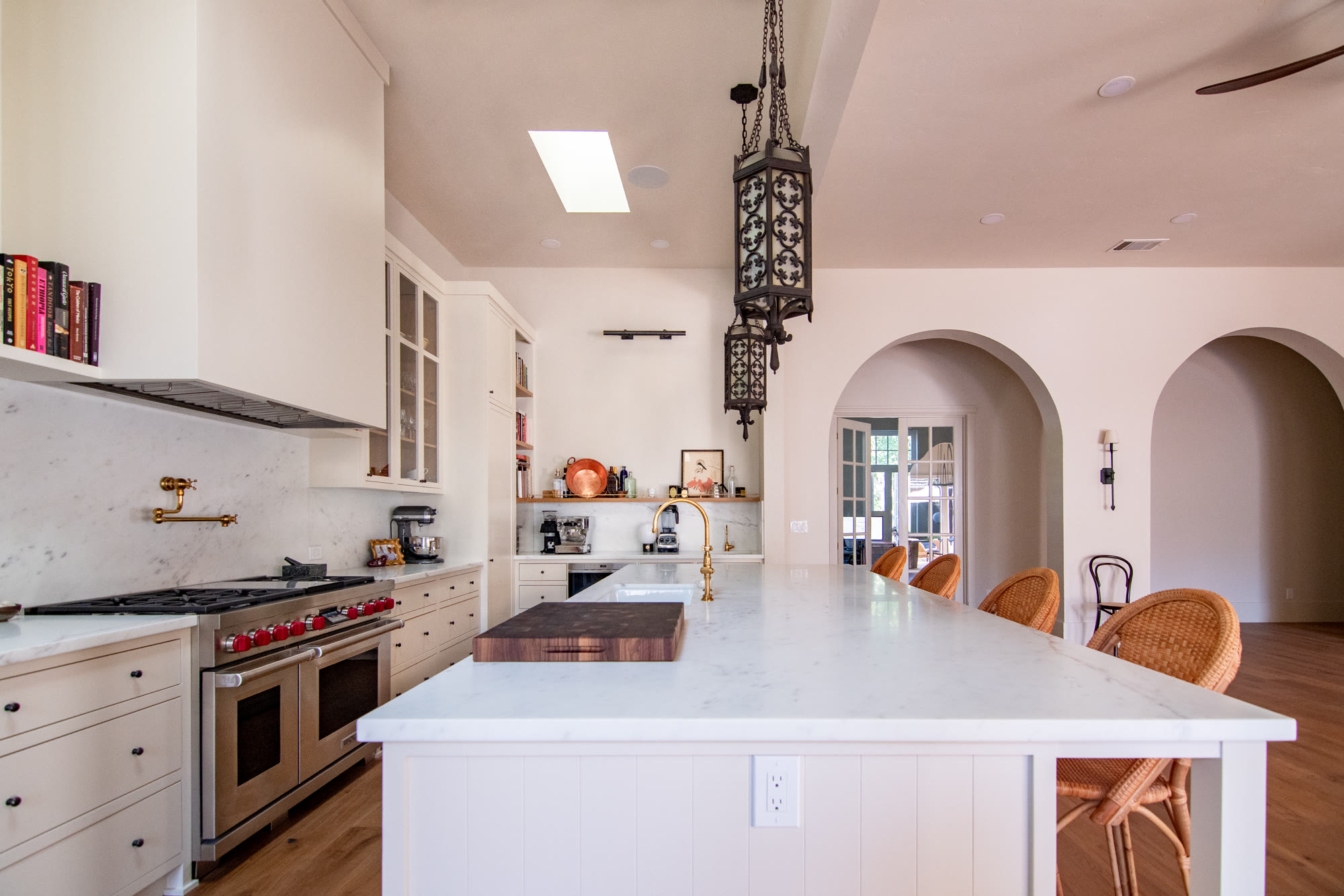
The stone was handled with the same care. The Carrara marble was selected and laid out with the client on site, with attention to how the veining would move across the island. Because of the island’s size a seam was unavoidable, so the slabs were book-matched to make that seam feel intentional rather than compromised. The marble reads continuous, calm, and perfectly tailored to the room.
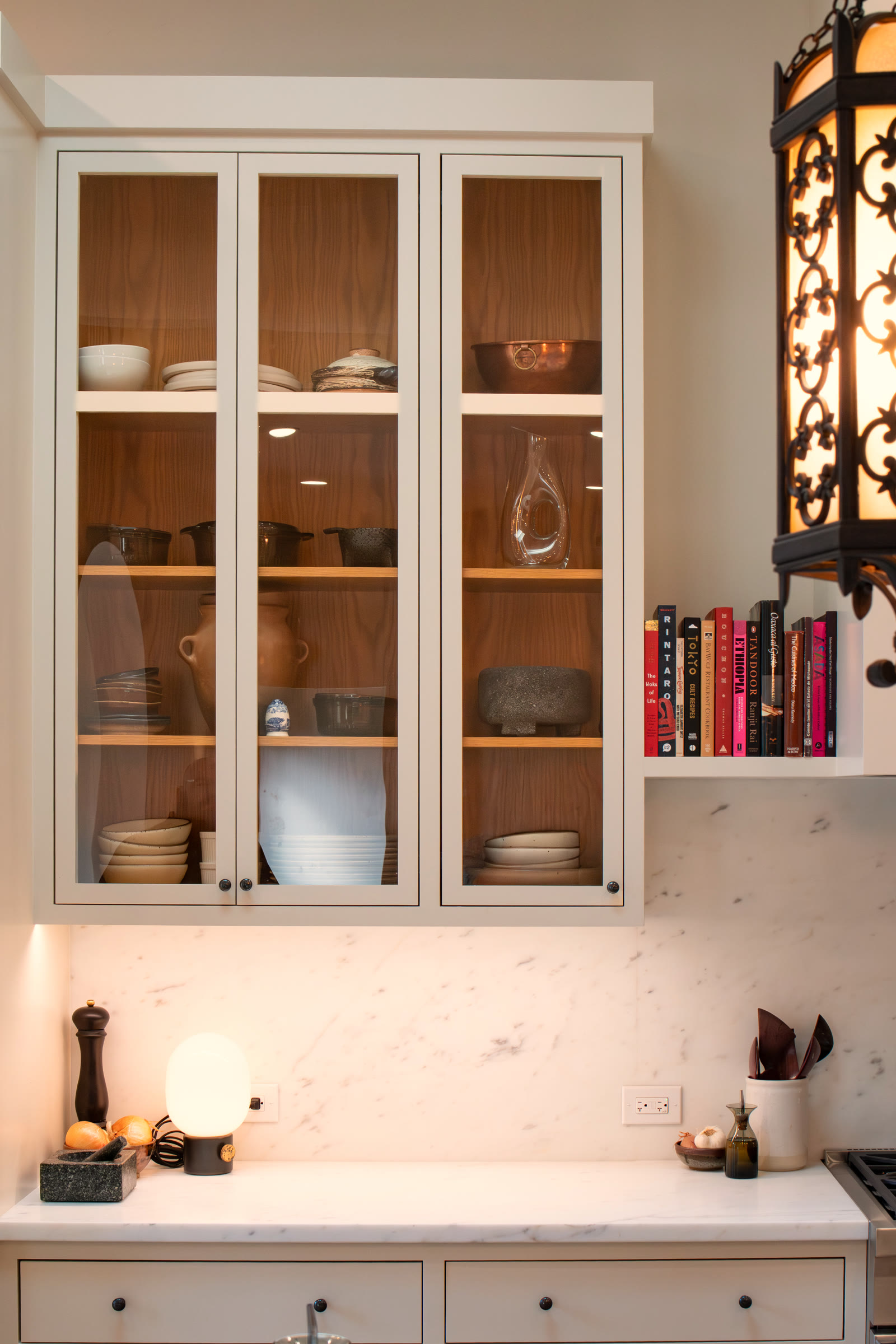
Rhythm. Book-matched Carrara runs level to the range — hardware and outlets landing on center, white oak glowing through the glass uppers.
Part V
An Architectural Language
The remodel introduced a stronger architectural language throughout the surrounding spaces. The plan originally included three arches; during the project that became two, creating a cleaner frame for the adjoining windows and improving the balance of the room. Matching arches were added on the office side, letting the two spaces speak to each other.
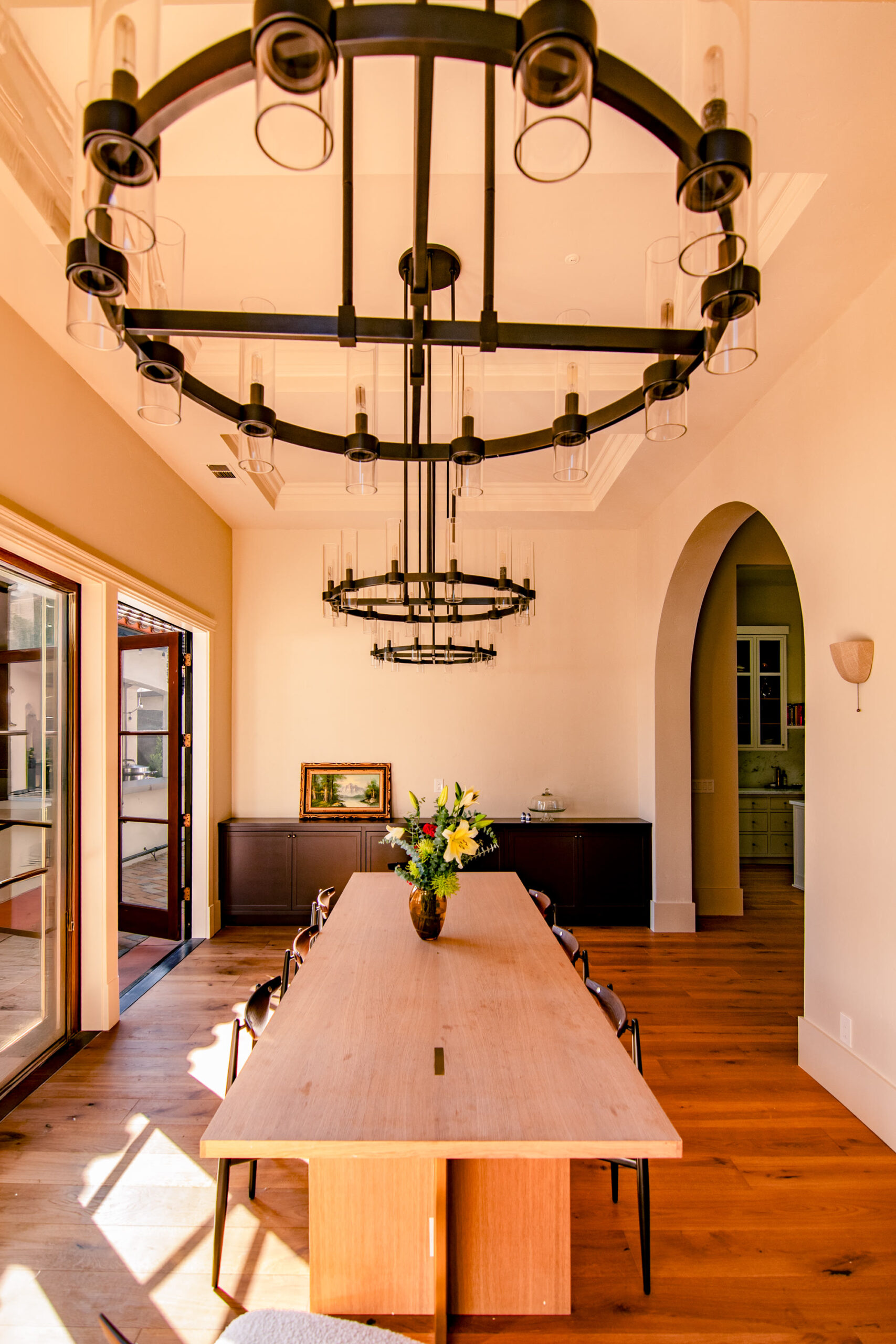
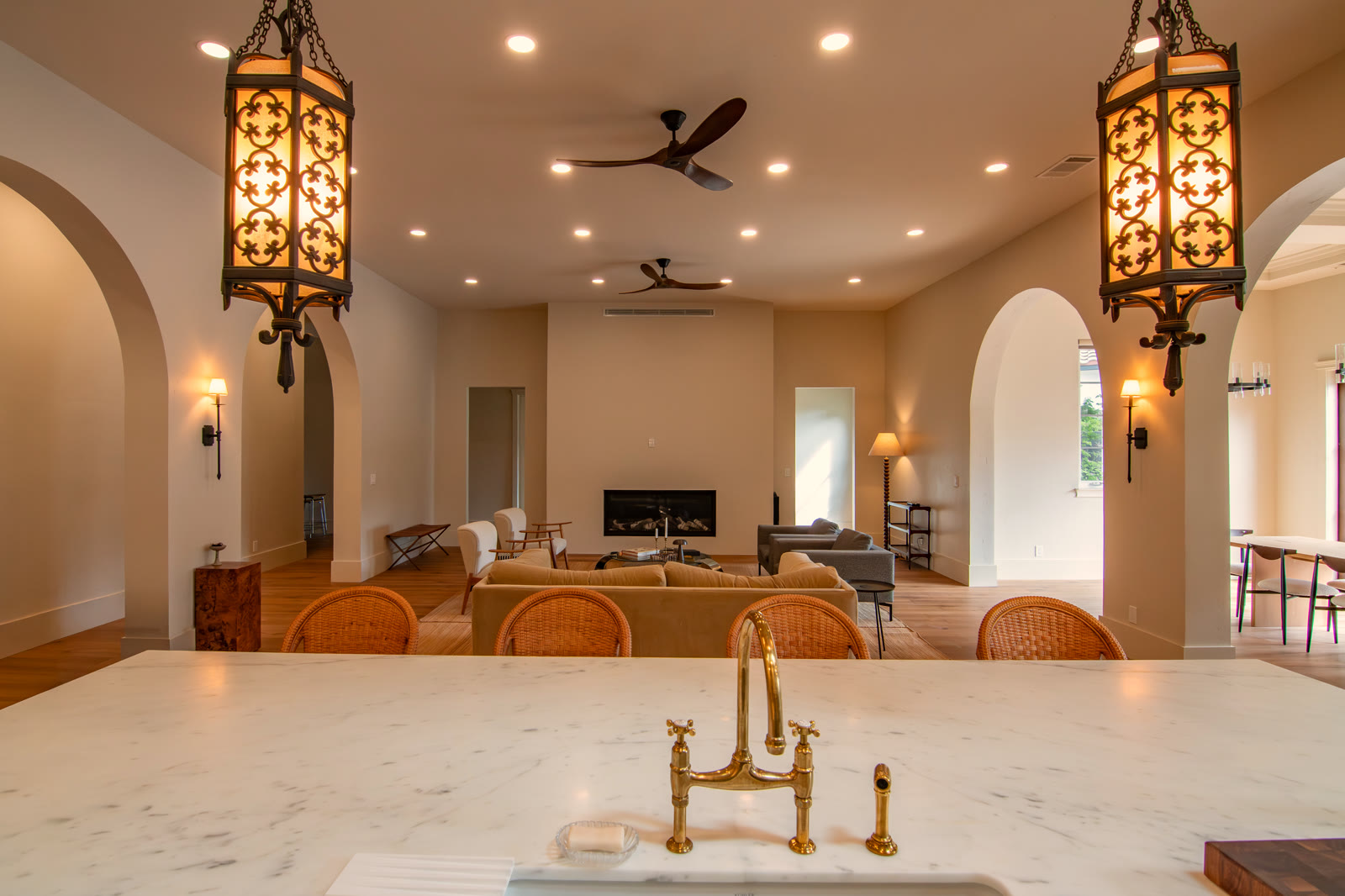
Overhead, iron chandeliers hang into a coffered ceiling, finishing a clean run of light from one end of the home to the other. In the dining area, a custom buffet brings in a deeper wine-toned color that warms the lighter kitchen and ties back to the bronze accents, chairs, and wood tones nearby.
An architectural language. Custom cabinetry and arches connect the cooking core to the rooms beyond.
Iron over oak. The dining chandeliers finish a clean run of light from one end of the home to the other.
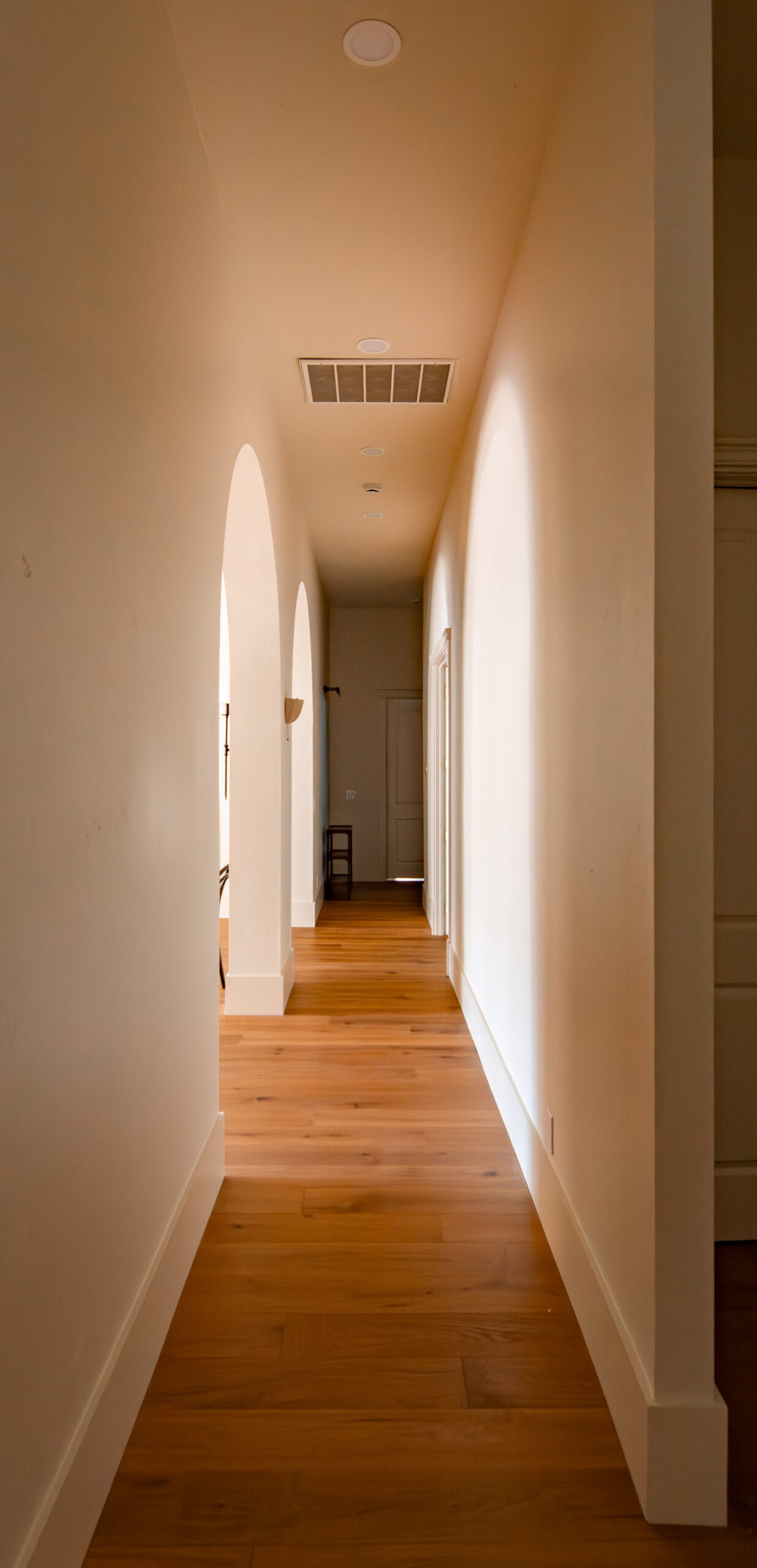
Room to room. White oak floors carry the remodel through the living areas.
Part VI
A Vision Realized
The home feels easy now — an elegant place to sit back as the breeze sweeps in through the French doors. But it wasn’t easy to get here. The symmetry, the material transitions, the flooring and lighting layout were all carefully planned and meticulously executed. The made-to-measure cabinetry, the archways, and the hidden storage were planned and crafted by local skilled artisans.
In the end it became more than a new kitchen. It became a study in restraint, proportion, warmth, and craftsmanship — a home designed not just to be seen, but to be lived in, used, and discovered over time.
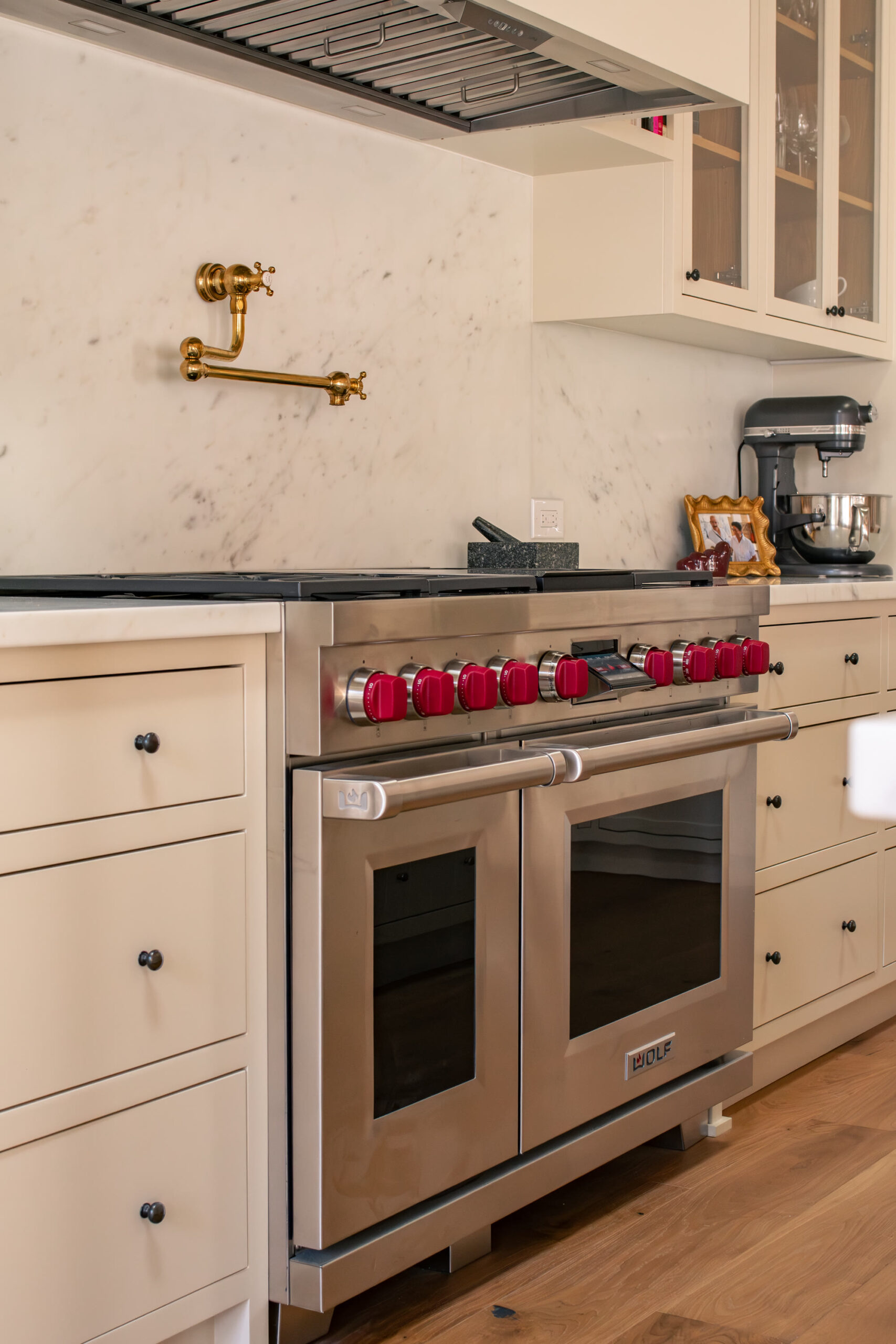
Left proud. The Wolf range under a solid-bronze pot filler and book-matched Carrara.
The Details
The pages go closer still.
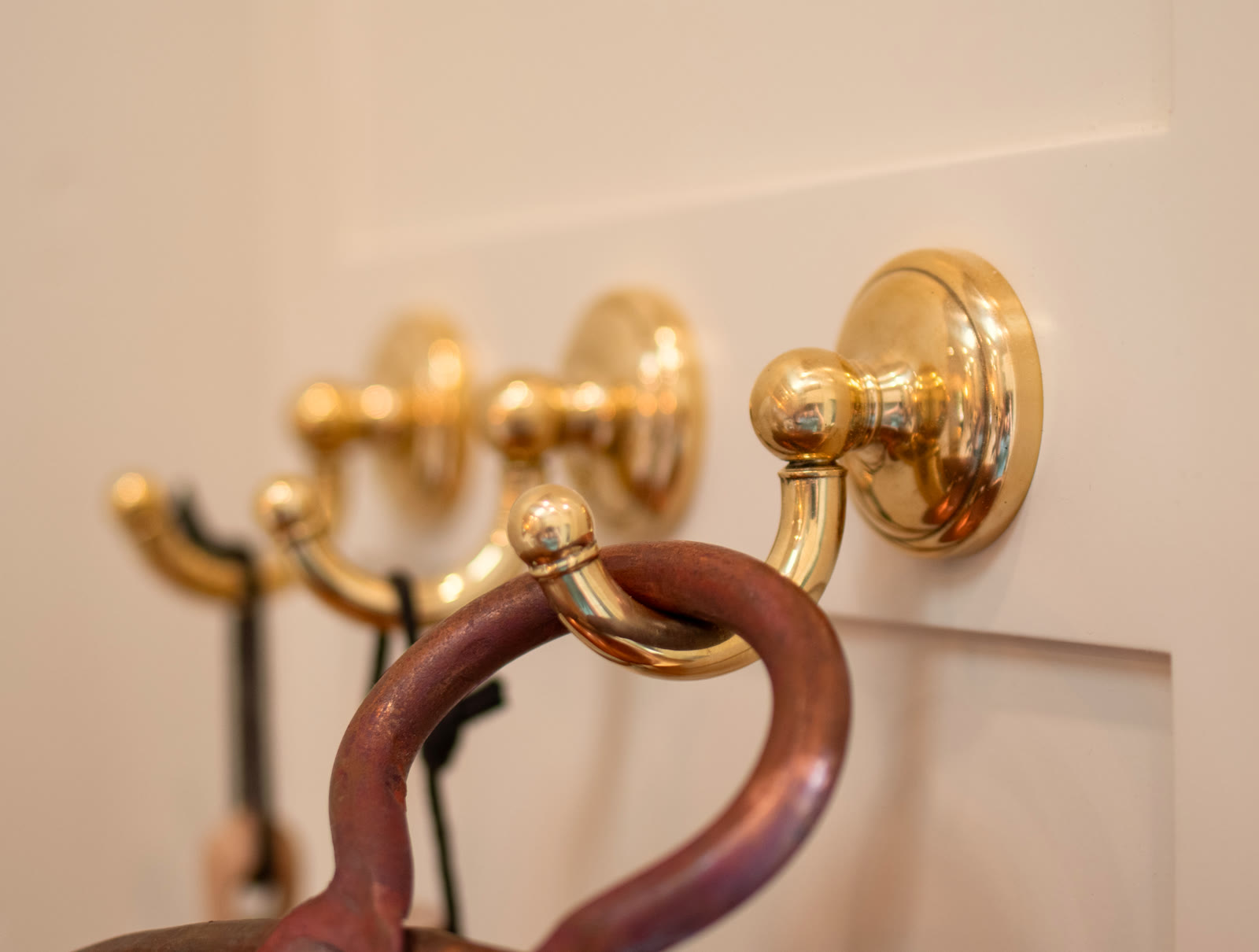
The print edition leans into the macro work — the cutlery drawers, the stemware cabinets, the hardware that will age with the home. Tap any frame to look closer.
The Digital Edition
Home in Detail — Volume I, Issue I
In every issue we look closely at one project. The bones, the materials, the hands that built it. Always quiet. Always honest. Always in the details. Twenty pages, cover to cover.
Every detail in this story was designed and built by Kitchen Home & Bath — custom kitchens and whole-home remodels across the Central Valley and Tri-Valley. Transforming spaces, creating homes — and the next one could be yours.